

By Dr. Rubu Tani
Since the perspectives of the national movement and tribal resistance differ due to various reasons, therefore, much of the history of tribal resistance against colonization has not been documented in details. In colonial records, however, these resistance acts have been interpreted and depicted as an attack by wild tribes on civilized governments. And, this form of colonial interpretation of history has been perpetuated for decades without any critical analysis of the events. In other words, many researchers failed to look at it from a tribal point of view; they failed to study it as a phenomenon of indigenous resistance. Throughout India’s tribal history, numerous heroic battles have been fought by the tribes against the colonial rule, but few of them have made it into history. This is particularly true of the adjacent hill tribes of Assam. The Khamti who are considered as one of the most important community of Arunachal Pradesh who carried out resistance movements against the colonial ruler, but their gallant act of resistance is still missing in the pages of history books. Therefore, all those tribal resistance movements should be researched and brought into the history of the region. Hence, in this paper, a humble attempt would be made to unearth the resistance movement of the Khamti.
Keywords: Arunachal Pradesh, Colonial, Historiography, Khamti, Resistance, Regional.
Introduction:
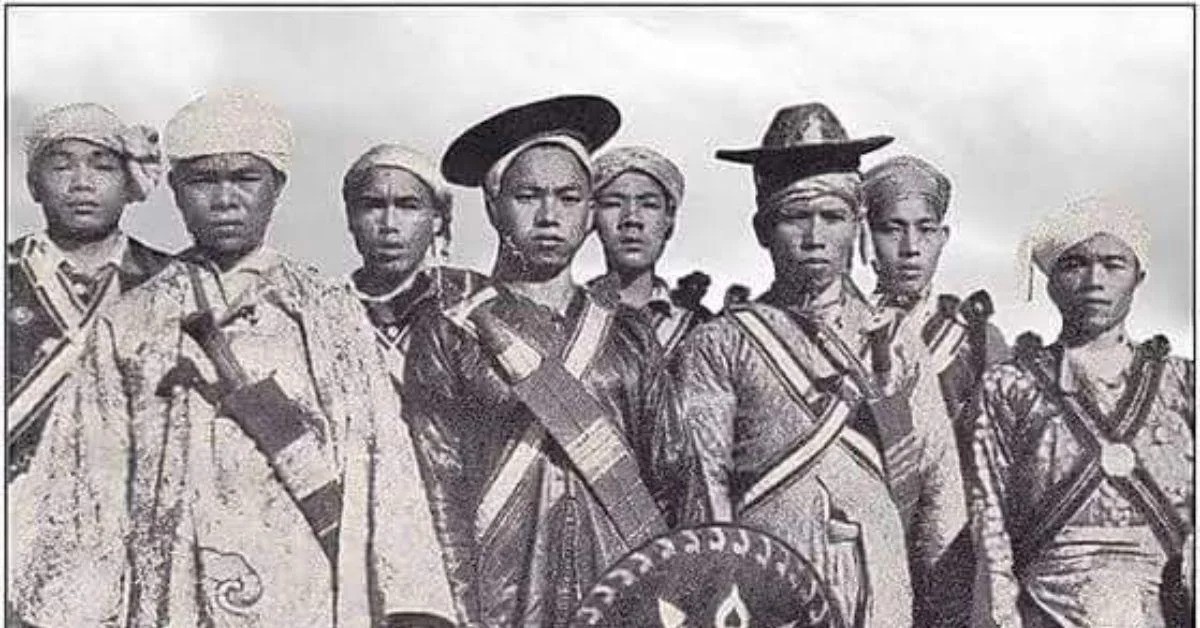
On 28th January, 1839, the Khamtis of Sadiya staged an armed revolt against the British. They ransacked barracks, burnt down arms and ammunition stockades, indiscriminately ravaged the colonial subjects in Sadiya and even killed a British officer Major White.
This rebellion lasted for about five years and considered as one of the first popular armed uprising against the colonial rule in North East India. But, the existing knowledge about their movements against the British has been largely written and understood from the colonial perspective, and has been perpetuated by the post-colonial writer without giving much thought. The colonial documents have been taken as the primary point of reference by the scholars, and unconsciously or otherwise, accepted the general validity of tribal raids, plunder and attack as an act of savagery against the civilized society. We have failed to take into account the opinion of the tribal people and how they perceived about the events or encounters they had with the colonial authority. Therefore, there still remains a serious lacuna as the knowledge, with its intermeshing relationship with colonialism and colonial intervention in the Khamtis area and the encounter with this tribe could never claim positions of neutrality and objectivity.
Therefore, this paper is a humble attempt to look the resistance movement of the Khamti from tribal perspective and bridge the gap between the existing colonial records and oral version of the resistance. Therefore, this work is a historical study based on primary and secondary data. And attempts have been made to understand it within the framework of colonialism and its operation in order to give a scientific, objective, and coherent picture of the Khamtis resistance movement.
This paper is divided into two parts. The first part provides a general background of the Khamti and discuss in what condition the interaction between the two (Khamti-British) were made possible. The second parts examines, what were the developments that followed, which made the Khamti to carry out resistance and armed rebellion which forced the English to fight long five years’ wars against them in the remote eastern corner of Assam.
-I-
The Khamtis of Arunachal Pradesh
Khamtis migrated across the Patkai Hills from the area near the Irrawaddy sources called Bar-Khamti in the mid of 18th century. They were allowed to settle on the bank of Tengapani river in 1751 A.D during the reign of Ahom king Rajeswar Singha.1 However, in the latter part of the eighteenth century, the Singphos who too migrated from Burma dislodged them from Tengapani’s bank and forced them into Buri-Dehing’s region. When, the Moamaria Rebellion broke out during the reign of Ahom king Gaurinath Singha (1780-1795 AD) the Khamti took advantage of the chaotic atmosphere ousted the Sadiya KhowaGohain from Sadiya (Ahom Frontier Governor). The Khamti chief assumed the office of the Sadiya Khowa Gohain in 1794; and in passage of time especially during the period of Burmese invasion of Assam (1817-1824) they brought entire Sadiya tract under their control.2 Hence, in this way the Khamti who migrated from Burma in look out for new settlement had curved out an independent political space for themselves in Sadiya region.
At present the Khamtis settled in the lower region drained by the Tengapani and Nao Dihang river and covers some sixteen villages in the Namsai district of Arunachal Pradesh.They are a Theravada Buddhist community. According to Census of India 2001, their total population is 12,890. The word Khamti means, a land full of gold (kham=gold: Ti=place).3 Their society is patriarchal in its nature and they mostly live in nuclear family called as Hong Huinleu. They have a traditional political organization called Mokchup and the head of the political organization is called as ChaoFa. Regarding the economic pattern sedentary agriculture is mainstay of their livelihood. Khamtis are among a few tribes of Arunachal Pradesh who have their own script, originally derived from the ‘Tai’ language and they maintain chronicles which are known as Chyatuie. They have their own law book called Thamasat.
Initial contact between the Khamti and the English East India Company
Internal rift within the Ahom court had brought the Burmese intervention in political affairs of Assam from 1817 onwards. Taking advantage of the chaotic political atmosphere in Assam, the Burmese established military control in 1822 under Mingimaha Bandula (Burmese Military General) and installed Jogeswar Singha as puppet ruler of Assam.4 Thereafter, they began to unleashed the reign of terror in Assam and began to attack upon the rulers of Golpara, Manipur, Cachar, and the island of Shahpuri on the Chittangong frontier.5 All these imperialist act of Burmese forced the English to give up the non-intervention policy and intervened in the affairs of Assam which resulted in the outbreak of the first Anglo-Burmese Was 1824-1826 A.D.6
Since, English were not aware about the geography of Assam, therefore, appeal for cooperation were made to the people of Assam and various tribal chiefs of the adjoining hills like Cahar, Manipur and Jaintia, etc., against the Burmese.7 In this connection, an emissary lead by Robert Bruce arrived at Sadiya, seeking active co-operation from the Khamti and Muttock against the Burmese and Singphos who were creating ravages in the adjoining villages in the east of the Rangpur.8 As stated above the Khamti did not have cordial relation with the Singpho, therefore, in hope to extirpate the Singphos menace forever from Sadiya region they agreed to give their assistance to the British against the Burmese and the Singpho.9 Therefore, with the help of the Khamti the British able to secure the upper part of Assam from the disturbance of Singphos and Burmese.10 This assistance during the war was highly appreciated by David Scott, who visited Sadiya in 1825 and found out that the whole area of Sadiya was under the control of the Khamti.11 Hence, in this way the initial contact between the Khamti and the British took place.
-II-
Roots of the Khamti Resistance: Encroachment through Administrative Development in the Khamti area
With the defeat of the Burmese at Rangpur in January 1825, the entire Brahmaputra valley was brought under the martial law of the English East India Company. This was followed by a policy of securing all those strategic locations through which the Burmese armies might invade back. In this connection, Sadiya and its inhabitants was strategically important to guard against the Burmese reinvasion.12 Therefore, efforts had been made to submit Sadiya to English control so that it could monitor the movements, behaviours, activities and communication of tribal groups beyond its frontier and prevent the Burmese from instigating hostilities against the British.13 With this objective from 1825 onwards, a slow but steady colonial penetration took place in Sadiya. A military station was established at Sadiya on 2 April 1825 to guard against the nearby tribes and Burmese re-invasion.14 In 1828, this military station was made as full-fledged British Agency under the supervision of Neufville the Political Agent of Upper Assam stationed at Bishwanath.15 Finally in 1834, the British brought more control over the Singphos, Khamtis, and Mataks frontier tribes under their control by placing Officer-in-charge in Sadiya.16
Officer-in-charge, Lieutenant Charlton began to encroach in the affairs of Khamtis in Sadiya. He organized panchayats in Khamti villages shortly after arriving in Sadiya. Wherein, he gave equal representation to the Assamese ryots of Sadiya, whom the Khamtis considered as their subjects, hence socially inferior. A large concentration of Assamese ryots in Sadiya naturally acquired a majority in most of the villages’ panchayats. As a result, the chiefs lost the privilege of dictating terms over the Assamese ryots.17 Apart from this, all the criminal and civil cases at Sadiya had to be reported to Charlton. This move curtailed the powers, of the Sadiya Khowa Gohain over civil and criminal matters over the inhabitants of Sadiya too. Further, Charlton proposed in December 1834, that census of the population be taken with the view to levying a capitation tax, to be renewed every five years, in lieu of military service to the state.18
Not only this, Charlton began to interfere in the personal affairs of Sadiya Khowa Gohain. In an instance, he accused Sadiya Khowa’s brother-in-law of kidnapping and selling an Assamese subject to the Singphos in Burma. He also accused the Sadiya Khowa Gohain of shielding his brother-in-law when the former behaved with great authority denying Charlton’s allegation, refusing to allow his brother-in-law to be brought under investigation.19 In such cases Sadiya Khowa Gohain was frequently summoned to the English court which was viewed as a great humiliation by the chief. The stand taken by the Sadiya Khowa Gohain to protect his authority and to protect his brother-in-law was treated by Lt. Charlton as a violation of the agreement, and wanted to depose him from his position.
Besides this, in order to establish the colonial hegemony, the Khamti were viewed as a subjugator who had reduced the population of Sadiya into slavery. This was expressed by Jenkins as thus, ‘the Khamtis did not pay any taxes to British government except in form of military aid in time of emergency. Whereas, they enjoyed the benefit of labour of Assamese subjects of Sadiya who constituted the bulk of the population and the entire productive classes were formed by Assamese subject whom the Khamtis considered nearly in light of their slave’.20
Therefore, all these clash of interest that cropped up after the appointment of Officer-in-charge at Sadiya was interpreted by the Khamtisas an encroachment on their traditional rights and privileges by Khamti chiefs. And, on the other hand, Officer-in-charge’s demand for a reorientation of the powers of the Sadiya Khowa Gohain was intensified and the colonial ruler was waiting for an excuse to dislodge the Sadiya Khowa Gohain from his position.
Dislodgement of the Khamti chief Sadiya Khowa Gohain
The question of dislodgement of Sadiya Khowa Gohain came to the forefront in 1834 when a dispute arose between Sadiya Khowa Gohain and Bar Senapati over the issue of the tract of land known as Saikhowa comprising of an area of 21,600 acres situated opposite of Sadiya.21 Its land was very fertile and with prospects for cultivation of high quality paddy, sugar, opium, tea, and the early rice.22 The disputed tract was formerly khat or land belonging to the Ahoms which they continued to hold till it was usurped by the Khamtis who founded claims over the area.23
This conflict between the Khamtis and the Mataks worsened when Sadiya Khowa Gohain, Chousalan, died in November 1834 and was succeeded by his eldest son Chau-rang-pha. He was keen on eliminating the British from Sadiya and considered Saikhowa as a legal possession of his ancestors.24 It was further complicated, when the matter was brought before Lt. Charlton in 1834, who asked both the parties to send their claims and till its resolution the land would be in possession of the British Government. This order was unacceptable for the new Sadiya Khowa Gohain who defied the order stating that, ‘I am no one’s slave… I will not conform to his order as he is going to seize the land that my father allowed them to settle there’.25 He defied the order and forcibly took possession of Saikhowa. This provided the British with an opportunity to dislodge him from his post. This defiance was reported by Charlton to Major White, the Political Agent, who then ordered his removal from his post. The removal order is recorded thus: A direct disobedience of the officer order is sufficiently proved against the Gohain and that the preceding fully shows that he had thrown off all regard to that officer’s authority as the representative of the British Government at Suddeyah (sic). Upon this ground, I have from officer and recommended permanent removal from the appointment of Suddeyah Khowa Gohain at the same time.26 Accordingly, Chau-rang-pha was removed from his post in January 1835 and sent from Sadiya to Bishwanath in February 1835.
Consequently, the post of Sadiya Khowa Gohain was finally abolished and Lt. Charlton took over the direct responsibility of the Khamti tract. This act of resuming rights over the Assamese inhabitants was justified by proclamation that, ‘the barbarous state in which it was kept by the Khamti chiefs has been broken through and it will gradually rise in civilization’.27
Changes introduced after dislodging Sadiya Khowa Gohain
After dislodging Sadiya Khowa Goahin, the Political Agent brought under his control, the territories on either side of the river i.e. Sadiya, and Saikhowa. In right earnest, the investigative modalities were launched in the form of a census of the population of Sadiya, while ascertaining the resources of the territory the British asserted their supremacy.28 Accordingly, a census was carried out at Sadiya which revealed that Assamese paiks constituted about 2/3rd of the population who were brought under assessment.29 The Khamtis were 1,975 in number.30 Subsequently, the British usurped the right to taxation over the paiks and Marwari as a monopoly. The peasants were taxed at the rate of Re.1/- per head in lieu of their personal service.31
The judicial power hitherto exercised over the population by Khamti was replaced by the British judicial system, administered by the officer-in-charge at Sadiya. While petty civil and criminal cases remained under the domain of the village panchayats who were exempted from the written disposition.32 Charlton persuaded the Khamtis to voluntarily commute their personal services for a payment in money at the same rate as fixed for the Assamese.33 Hence, this proposal to bring them under taxation and simultaneous conduct of census in Sadiya magnified resentment among the Khamtis.34 And, the previous system of providing muskets under Captain Neufville was also withdrawn.35
However, it has to be admitted that the move to impose taxation on the Khamtis ran counter to the policy of Neufville, who consistently aimed at conciliating these warlike’ tribes to make them faithful allies against the Burmese.36 On the other hand proposal had been made by Jenkins that a new treaty should be signed with the Khamtis; new census should be carried out to ascertain the population of Khamtis every five to ten years; and should made it known to the Khamtis that all wasteland as the property of the state.37 Through this wasteland policy, they categorized the unused/community land as wastelands, and brought it under their domain. However, for the Khamtis, apart from agriculture, forest was a major alternate source for the economy, from where they procured firewood, forest produce and was a hunting ground for all kinds of animals and elephant catching. However, the net impact of such proposal was not all negative, as beneath, the apparent coolness in the surface, frustration was mounting, as the dislodgement of their chief, making Assamese population of Sadiya as equal to them did not only hurt their pride but also destroyed their economy which was largely dependent on the slaves and Assamese paiks at Sadiya.
All these act of British resulted into smoldering embers of discontent lay dormant to burst forth when an opportunity presented itself.
Colonial Intervention in the Institution of slavery
Slavery had been always a burning debate among the English parliamentarian. However, despite various disagreement and debates between the local administrators in India the Directors, the abolition of slavery order was implemented in letter and spirit among the Khamtis.38 In order to delegitimize the institution of slavery and to convince the Governor General-in-Council of the effectiveness of such a move, the Khamtis were presented as refugees from Burma. They were shown in the bad light where they had reduced Sadiya and its population into a barbarous state. Therefore, it was the duty of the British to restore a semblance of order and civilization.39 Hence, under the pretext of civilizing mission the institution of slavery was attacked just after the expulsion of the Burmese from Assam; by signing treaties with Khamtis in 1826. Neufville, insisted on the surrender of their large number of slaves, in lieu of a compensation of rupees four thousand. Of the slaves liberated, 300 were incorporated into the regular fighting forces under Captain Neufville.40 The Khamti and Singpho chiefs, who were reluctant to release their slaves, were served notices with the threat of confiscation of property and expulsion from the lowlands.41
The Khamti royal class, who were largely depended on the slave population for agriculture and other domestic work, grudgingly accepted the terms of British agreement of 1826. Despite this agreement, slaves continued to be held by the Khamtis. However, the old tradition of the Ahom government of restoring fugitive slaves to their masters was curtailed under British rule.42 The British government directed the Political Agent that, ‘It is the rule to refrain from any summary interference for compelling the return to a state of slavery individuals who may have affected their escape from it. Every individual must be presented to be in a state of freedom until the contrary is proved’.43 Therefore, the runaway slaves were not forced to return to their masters, rather protected them as British subjects.44 The Governor General-in-Council issued instructions to Jenkins to reject all applications of the slave masters seeking restoration of the slaves claimed as their property.45 So, taking advantage of the British military stationed at Sadiya, many slaves especially the women slaves ran away with military guards. In one such instance, a female slave absconded from the chief Tao Gohain, taking refuge in the Upper Assam with one of the chuprassies of a British Officer, Mr. Millar.46 The escape of this female slave was not due to maltreatment, rather because, the sepoy and others serving under the company with higher salaries were capable of rendering them a comfortable life.47 In addition, the British lured the slaves to work as wage labourers, especially the mature male slaves who frequently escaped into British jurisdiction. The slaves who remained with the Khamtis were usually old and aged who could not work for their masters, rather becoming a burden to sustain them.48
The process of maintaining slaves was quite expensive as they were captured either through war or inherited from the family, while many were bartered with precious materials from other neighbouring tribes.49 However, under British rule the slaves were freed without paying compensation and the freed slaves were engaged in constructing of roads, building stockades, and houses for officers, and employed as soldiers etc. This action changed the attitude of the chiefs Sadiya Khowa Gohain, Tao Gohain, Ranua Gohain, and Kaptan Gohain, they were unable to tolerate the loss of Assamese slaves, their only source of wealth. The freed slaves were employed by the British officers, which created a lot of inconvenience, who considered this as an injustice.50 Hence, all these development under British was considered as an encroachment upon their traditional institutions. Hence they were prepared to take up an armed struggle when the right opportunity arose and carry out violent attack over the British military station at Sadiya.51
Outbreak of Armed Rebellion in January, 1839:
It is therefore evident from the above discussion that the Khamtis were discontented under the new political dispensation in Assam. In 1835, the Sadiya Khowa Gohain defied the order of the Political Agent to protest against British encroachment over the traditional rights. However, this nascent opposition was unsuccessful, which compelled them to prepare for the greater resistance without showing any apparent signs of discontent. This clandestine preparedness for resistance accelerated with the news of Lt. Miller’s departure from Sadiya and entrustment of duties of civil administration to Major Adam White. He was ordered by the Commissioner of Assam to relocate the headquarters of the Assam Light Infantry as well as Political Agency from Bishwanath to Sadiya in September, 1838. This was in view of the considerable importance of the place and growing security concerns at the frontier.52 Accordingly, Major White relocated along with men and provisions of the Assam Light Infantry to Sadiya on 25 Jan, 1839. This move raised alarm among the Khamtis that the new administration was determined to stay at Sadiya. The loss of their privileges within their own territory galvanized them to prepare for an open rebellion before White consolidated his position in Sadiya.
Following the conclusion of the durbar, White retired to his official residence, while the chiefs dispersed. In the early hours of the morning, on 28th January, 1839, the station at Sadiya was attacked.53 The attacking party consisted of Khamtis numbering about 600 fighting men who were armed with daos, spears, and muskets. They attacked at the vulnerable positions with extreme swiftness.54 The experience of their chief Kaptan Gohain, who had been a leader of the Khamti militia was armed with a definite knowledge of the British settlement helped.55 The other advantage was that their language was unknown to the Assamese population, which helped to keep their plans a secret.56 To ensure speedy action they organized themselves into four groups under the chiefs- Chau-rang-pha, Tao Gohain, Kaptan Gohain, Chau-pha-Plung-lu Gohain, Ranua Gohain, who made simultaneous attacks on different vulnerable positions of the British post.
One group advanced upon the magazine guard situated close to the open gate of the stockade where 1 Havildar, 2 Naiks, 1 Bugler, and 31 Sepoy were stationed.57 The second group attacked the rear guard of the stockade, slaying the sentry, wounded three others and moving on to the centre of the stockade where the bells of arms were kept and set fire on it. While these two groups attacked the stockade and magazine guard, the third group found the bungalow of Second-in-command close on the left of the line. They attacked the left company lines, and setting fire on them. The fourth group went around the rear of the Light Company lines and was searching for White. Amidst this chaos, White left his own bungalow, proceeding by the new road to the lines when the fourth group who were evidently in search of him confronted him. He was stabbed at nine different places by a spear and was found dead by the Sergeant Major who arrived on the spot minutes after the occurrence.58
This night attack of the Khamtis was swift and unexpected. This was one of the boldest attacks ever made by the hill tribes on the North-East Frontier against the British. They killed seventy men and set the barrack and the ammunition store on fire. They also burned down the hospital and all the stock of medicine.
However, the attackers surprisingly did not take anyone captive nor did they take any weapons and withdrew despite their success in razing the military station at Sadiya and retreated into deep forest to protect their families from a counter attack, and to make strategies to launch a counter-attack with other hill tribes.59 Accordingly, the Khamti leader divided themselves into two groups and retreated in different directions. One group under the leadership of Tao Gohain and Kaptan Gohain retreated towards the Abors hills, while the second group under the leadership of Chau-pha-Plung-lu and Chau-rang-pha retreated towards Mishmi hills, and Singpho habitations to persuade the other frontier tribes to stand united against the British.60 They were aware of the inferiority in arms made them vulnerable against open attack from the British. Therefore, they retreated to the forests and adopted guerrilla warfare strategy to attack the British.61 Their armed rebellion lasted till 1843 when they finally one by one all the rebel groups surrendered before the British suppressive measure.
Conclusion
From the above discussion, it can be inferred that the resistance and armed rebellion of Khamtis was not an isolated events rather it was perpetual negation against the colonial scheme with aim to maintain their independence in polity, territory, society and economic life of the tribe. However, due to traditional techniques and lack of sophisticated weapons they could not stand against British might, and the disunity created among them and between their supporters, led them to surrender eventually. Though a failed resistance, but the gallantry which the Khamtis displayed in attacking the garrison of Sadiya and continued their rebellion for five years against a massive organized British force speaks very highly of their martial value.
Endnotes
1 Lakshmi Devi, Ahom Tribal Relation, Lawyer’s Book Stall, Guwahati, 1968, pp. 241-42.
2 L.N. Chakravarty, Glimpses of the Early History of Arunachal, Director of Research, Itanagar, 1973, p.76.
3 Lila Gogoi, The Tai Khamptis of North East India, Omsons Publications, New Delhi, 1971, p. xxxiii.
4 Priyam Goswami, The History of Assam: From Yandabo to Partition 1826-1947, Oriental Black Swan, New Delhi, 2012, p.15.
5 Priyam Goswami, The History of Assam: From Yandabo to Partition 1826-1947, Oriental Black Swan, New Delhi, 2012, p.15.
6 Ibid.,p.16.
7 H.K. Barpujari, Assam in the Days of the Company: 1826-58, Lawyer Book Stall, 1963, p.39.
8 R.M Lahiri, The Annexation of Assam, Firma KLM Private Limited, Kolkata, 2003, p. 15.
9From F. Jenkins to the Secretary to the Government of Bengal, Political Department, letter no.4, 16th January, 1836. (National Archive of India, New Delhi).
10 S.L. Baruah, Last days of the Ahom Monarchy: A History of Assam 1769-1826, Munshiram Manoharlal Publisher, New Delhi, 1992, p.241.
11 L. Gogoi, The Tai Khamtis of North East India, Omsons Publication, New Delhi, 1971, p.27.
12 M.L. Bose, British Policy in North East Frontier Agency, Concept Publishing House, New Delhi, 1979, p.141.
13 M.L. Bose, British Policy in North East Frontier Agency, Concept Publishing House, New Delhi, 1979, p.141.
14 John F. Michell, The North-East Frontier of India: A Topographical, Political, and Military Report, p. 149, http://www.southasiaarchive.com/Content/sarf.143016/209522/005 (accessed on 28 Nov 2017 at 05:05:45)
15 M.L. Bose, The History of Arunachal Pradesh, p. 154.
16 New Delhi, NAI, Foreign Department Political Consultation (henceforth FDPC), letter from F. Jenkins to Lieutenant Charlton, no.78, 24th July, 1834.
17 H. K. Barpujari, vol. I, pp. 76-77.
18 John Butler, A Sketch…, p.46.
19 Kolkata, WBSA, BPC, letter from A. White to the Agent of the Governor General Assam, no.2, 13th March, 1835.
20 New Delhi, NAI, FSC, letter no-4, 16th January, 1836.
21 Kolkata, WBSA, BPC, letter nos. 1-2, 13th March, 1835.
22 A.J. Moffat Mills, The Reports on Assam, Gian Publication, Delhi, 1980, p. 2.
23 Kolkata, WBSA, BPC, letter from A Charlton to the Political Agent of Upper Assam, no.1, 6th Dec 1836.
24 R.M. Lahiri, p. 248.
25 Kolkata, WBSA, BPC, letter from A. White to the Agent of Governor General Assam, letter no. 2, 23rd Feb, 1835.
26 Kolkata, WBSA, BPC, letter from Major White to the Agent of Governor General Assam, no. 2, 23rd Feb, 1835.
27 Dispur, ASA, PDP, letter issued to the Government, to the Secretary to the Government of Bengal, no. 4, 16th Jan, 1836.
28 Kolkata, WBSA, BPC, no. 1, 13 th March 1835.
29H.K. Barpujari, The Problems of Hill Tribes in North-East India 1822-42, p.144
30 Lila Gogoi, p. 223.
31R.M. Lahiri, p.249
32 Alexander Mackanzie, pp.58-59
33 Dispur, ASA, PDP, letter from F. Jenkins to the Secretary to the Government of Bengal, no. 4, 16th January, 1836.
34 Kolkata, WBSA, BPP, letter from A. White to Captain Jenkins, Agent to the Governor General of Bengal, no.11, 24th November 1835.
35 J. Butler, pp. 46-47.
36 New Delhi, NAI, FSC, letter from F. Jenkins, Agent to the Governor General to Major White Political Agent upper Assam Bishwanath, letter no-11, 8th October, 1835.
37 Kolkata, WBSA, letter from Jenkins to the Political Agent of Upper Assam, no. 1, 13th August 1835.
38 A.K. Thakur, p.125.
39 Dispur, ASA, PDP, letter no. 4, 16th January 1836.
40 Kolkata, WBSA, BSPC, nos. 22-24, 2 September, 1825.
41 H.K. Barpujari, vol.I, p.38.
42 Meena Sharma Barkataki, p. 157.
43 Dispur, ASA, PDP, no. 3, 12 September, 1836.
44 New Delhi, NAI, FPC, letter from Vetch to Jenkins, no. 139, 8 June, 1840.
45 New Delhi, NAI, FPC, letter from Prinsep to Jenkins, no. 87, 9 November, 1842.
46 Meena Sharma Barkataki, p.157
47Meena Sharma Barkataki, p.157.
48 Interview with Chownawing Namchom, on 16th January, 2016.
49 Interview with Chownawing Namchom, on 16th January, 2016.
50Meena Sharma Barkataki, p.157
51 Interview with Chownawing Namchom, on 16th January, 2016.
52 New Delhi, NAI, FPC, no. 161-62, 17th October, 1838.
53 New Delhi, PDFC, letter from F. Vetch to Captain F. Jenkins, Agent to the Governor General of Assam, letter no. 1, 18th April, 1840.
54 New Delhi, NAI, FDPC, letter from F. Jenkins to the Secretary to Government of India, no. 159, 27th February, 1839.
55 New Delhi, NAI, FDPC, no. 159, 27th February, 1839.
56 New Delhi, NAI, FDPC, no. 159, 27th February, 1839.
57 New Delhi, NAI, FDPC, letter from F. Hannay, Commander Assam Light Infantry to H. J. Prinsep, Secretary to Government of India, no-111, 22 May, 1839.
58 New Delhi, NAI, FDPC, letter no-111, 22 May, 1839. Colonel White had been a political agent with long experience in the region who had repressed an earlier rebellion of the Singpho.
59 Chow Khok Manpoong, 87 years of aged, male, retired Government Servant, renowned public leader of Khamti, Namsai, interviewed on 12 th January, 2016.
60 Interview with Chownawing Namchom, on 16th January, 2016.
61 New Delhi, NAI, FDPC, letter no.160, 27 February 1839.