
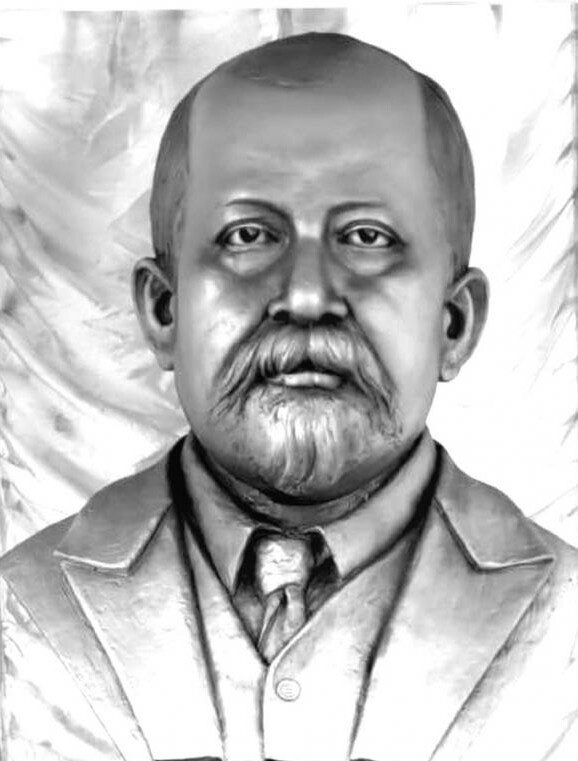


By - Gautam Sarmah
Among the many distinguished personalities who shaped modern Assam, the name of Bholanath Barua deserves a place of exceptional honor. At a time when trade and industry were not considered respectable or desirable professions among most Assamese families, he dared to dream differently. Through extraordinary determination, business acumen, and an unwavering commitment to society, he emerged as one of the earliest and most successful Assamese entrepreneurs of the modern era. His life remains a remarkable example of how vision, hard work, and patriotism can transform both an individual and a society. Bholanath Barua was born on 23 May 1853 at Puranigudam in present-day Nagaon district of Assam. He belonged to the family of the Kharangi Baruas, a lineage associated with the administrative structure of the Ahom kingdom. His father, Ghanshyam Barua, served as a Mouzadar, while his mother was Bhogadai Barua. Though born into a respected family, Bholanath’s early life was marked by hardship. When his father lost his mouza, the family faced severe financial difficulties. Yet adversity could not suppress the young boy’s thirst for education and self-improvement.
From childhood, Bholanath displayed unusual intelligence, discipline, and perseverance. To attend school at Nagaon Government High School, he walked several miles every day from Puranigudam. Such determination was rare in an age when educational facilities were limited and transportation almost nonexistent. Financial constraints forced him to engage in small commercial activities while still a student. Nevertheless, he continued his studies with remarkable dedication and eventually moved to Guwahati under the guardianship of relatives Phatik Chandra Barua and Manik Chandra Barua. There he pursued higher education and developed a broader understanding of the changing economic world around him.
The turning point in his life came when he decided to venture into business. During the nineteenth century, many Assamese youths preferred government service, considering business an uncertain and risky occupation. Bholanath, however, recognized that commerce was a powerful instrument of economic advancement. Inspired by the belief that trade creates prosperity, he left for Calcutta in 1891 to build a career in business. His initial capital was only five hundred rupees, generously provided by the wife of his relative Phatik Chandra Barua. From this modest beginning emerged one of the most remarkable business success stories in Assam’s history. Calcutta, then the commercial capital of British India, offered immense opportunities. There Bholanath came into close contact with Assamese intellectuals, including the future literary giant Lakshminath Bezbaroa. Their friendship would later contribute significantly to the growth of Assamese literature and culture. Encouraged by such associations and driven by a strong entrepreneurial spirit, Bholanath entered the world of trade.
He initially started a cotton business and gradually expanded his operations. What began as a small enterprise soon evolved into B. Brothers Company and later B. Barua Company. Unlike many businessmen who confined themselves to a single field, Bholanath diversified his interests extensively. He traded in timber, cotton, railway sleepers, steel trunks, almirahs, tea, coal, kerosene, stone chips, and several other commodities. His business network spread across different regions of India and eventually reached international markets. Contemporary accounts indicate that his timber business expanded far beyond Assam and into Bengal and Odisha, making him one of the earliest Assamese businessmen to build a large-scale commercial empire.
His success was not merely the result of good fortune. Bholanath possessed an extraordinary ability to identify opportunities, establish connections, and adapt to changing economic conditions. He understood the importance of infrastructure in business development. Historical records suggest that he actively promoted railway expansion because he recognized that transportation networks were essential for commerce and regional growth. He even travelled to Britain and interacted with influential officials in support of such developmental initiatives. As his business flourished, Bholanath earned the honorific title “Saud,” meaning merchant. Yet wealth never became his ultimate goal. He believed that prosperity carried social responsibilities. Unlike many successful businessmen who focused solely on personal accumulation, Bholanath viewed wealth as a means of serving society. This philosophy transformed him from a wealthy merchant into a revered philanthropist.
His contributions to education were particularly significant. He donated large sums to various educational institutions, including the prestigious University of Calcutta and Banaras Hindu University. He recognized that education was the foundation of social progress and national development. He also supported technical and vocational education, understanding that modern economic growth required skilled manpower. His donations helped numerous students and institutions during a period when educational resources were scarce. Contemporary accounts note that educational institutions held him in high regard, and efforts were made to honor his contributions formally.
Bholanath's generosity extended to healthcare as well. He established and supported hospitals in several places. Not content merely to construct buildings, he also financed amenities that improved patient comfort, including electric lighting and fans. Such initiatives were remarkably progressive for the early twentieth century and reflected his concern for human welfare. His role in the advancement of Assamese language and literature was equally important. During the colonial period, Assamese society was undergoing a cultural renaissance. Bholanath became one of the leading patrons of this movement. He provided financial assistance for the publication of several important literary and historical works. Among the books that benefited from his support were works on the lives of the great Vaishnavite saints Sankardeva and Madhavdeva, scholarly compilations by Hemchandra Goswami, and children's literature intended to nurture future generations. His patronage helped preserve Assamese heritage at a crucial moment in the language's development.
Writers and intellectuals deeply appreciated his commitment to Assamese identity. Literary scholars have noted that Bholanath was not merely a businessman but an active participant in the cultural awakening of Assam. His contributions accelerated the Assamese renaissance and strengthened the foundations of modern Assamese literature. What makes his achievements even more remarkable is that he remained deeply attached to Assam despite spending much of his professional life outside the province. He built residences in different parts of India, yet many of them bore names such as Assam Villa, Nagaon Villa, and Kamrup Villa. These names reflected his enduring emotional connection with his homeland. Even while conducting business on a national and international scale, he never forgot his roots.
His residence at Shillong, known as Shalvilla, became famous for its beauty and natural surroundings. Friends and visitors often admired not only the elegance of his homes but also his warm hospitality. Bholanath possessed a cheerful personality and a refined sense of humor. His conversations were known for their wit and charm. He could establish friendships with people from diverse backgrounds and professions, making him a respected figure in both business and intellectual circles. Among his acquaintances were several prominent personalities of the time, including the renowned scientist Jagadish Chandra Bose, educationist Ashutosh Mukherjee, and later political leader Gopinath Bordoloi. Such associations illustrate the high regard in which he was held across different spheres of public life.
Bholanath also cultivated intellectual interests beyond business. He was an enthusiastic reader who preferred serious and thought-provoking books. He enjoyed theatre, cinema, and cultural performances and remained closely connected with the intellectual currents of his age. His appreciation of knowledge and culture complemented his commercial success, making him a truly well-rounded personality. Despite amassing considerable wealth, Bholanath lived with a strong sense of public duty. He never married and devoted much of his fortune to causes that would benefit society. His philanthropy was guided not by the desire for fame but by a genuine commitment to social welfare. In many respects, he anticipated the modern concept of corporate social responsibility long before the term came into existence.
On 30 May 1923, Saud Bholanath Barua passed away, bringing to an end an extraordinary life of enterprise and service. Yet his legacy did not die with him. His contributions to commerce, education, healthcare, literature, and public welfare continue to inspire generations of Assamese people. Even a century after his death, scholars and institutions remember him as one of the pioneers who demonstrated that Assamese society could excel not only in administration and scholarship but also in entrepreneurship and industry. Recent academic discussions have continued to highlight his entrepreneurial vision and lasting contribution to Assam's commercial history.
The story of Saud Bholanath Barua is ultimately the story of courage, innovation, and social commitment. He rose from financial hardship to become one of the most successful businessmen of his time. He transformed personal success into public service. He promoted education, preserved culture, supported healthcare, and strengthened the economic confidence of his people. At a time when India seeks greater entrepreneurial energy and self-reliance, his life remains profoundly relevant. He stands not merely as a successful merchant of the past but as a timeless symbol of enterprise, patriotism, and enlightened philanthropy whose example continues to illuminate the path for future generations.
(The writer is a faculty member of History at Rabindranath Thakur Vishwavidyalaya)