

By Tarun Loying
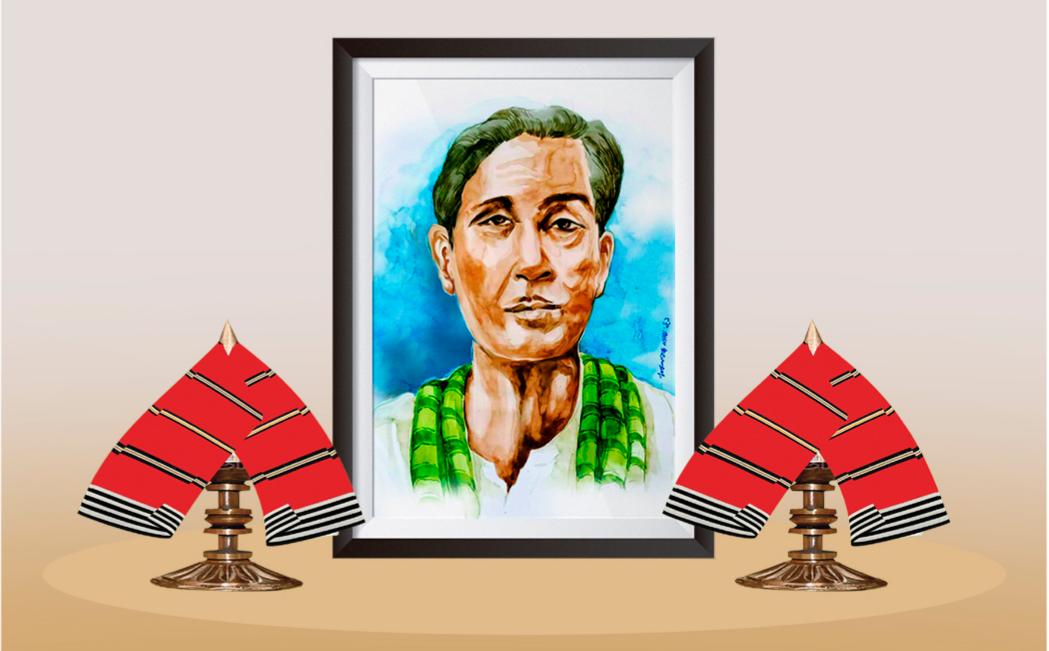
Those persons who have fearlessly sacrificed their lives for the freedom of their motherland from the bondage of the colonial rulers are seen to be worshipped as God. The contribution of the martyrs who thought that their motherland is much superior than the heaven, have become the source of inspiration for the younger generation. One of such martyrs was Kamal Chandra Laing, who is also known as Kamala Miri. Kamala Miri was born in Opor Temera village of Rangamati Mouza in Shivasagar district (at present Golaghat district) in the year 1894. Later, the Opor Temera village was divided into many parts and the village in which Kamala Miri was born is nowadays known as Gulung Temera. Kamala Miri’s father was Chikou Laing and mother was Mangali Laing. At that time there was no educational institution in the village Opor Temera, and therefore Kamala Miri move had to Bholaguri for his education. It is known at Bholaguri he became friendly with a famous freedom fighter Aapiram Gogoi. According to some people, Kamala Laing took his primary education from a person named Sonaram Mitra who knew Bangla. Kamala’s partner Sondhan Pegu, a freedom fighter of Pathari village also took his education from Sonaram Mitra.
The freedom struggle started under the leadership of Mahatma Gandhi and succeeded to spread the message of patriotism in every nook and corner of India. The message of patriotism also encouraged Mising youths like Kamala Miri and his friends in Golaghat district (at that time Shivsagar district) of Assam. By getting inspiration from the slogans, thousands of youths came forward to free India from the shackles of British rulers. Though it is not known exactly since when Kamala Miri started participating in the freedom struggle of India for the first time, but a well-known Mising writer named Tankeshwar Laing took an interview from the closest associate freedom fighter of Kamala Miri, Sondhan Pegu in the year 1966 and mentioned in his writing ‘congresor nirjatito karmi Sondhan Pegur somu kahini’ that from the year 1926, including Kamala Miri, Baloran Laing, Bepung Pathori, Korddik Morang etc participated in the freedom struggle of India actively. After coming in contact with Rajendra Barua, Sankar Barua etc, Kamala Miri, specially in four Mauzas, joined the freedom struggle of India against the British inspiring the common people with the slogans of patriotism. In this matter, Kamala Miri took the responsibility of organising the Mising tribe villages. Specially in the villages like Opor Temera , Dusuti Mukh, Morongial, Narmari, Nam Temera, Seleg Gao, Bhakat Sapori, Pathori Gao, Gulung Gao, Medok Gao of Rangamati Mouza, Na Bhanga Mising Gao, Saroh Gao, Birina Gao, Gorumora Sapori, Dubi Gao of Misamora Mouza, Dhansiri, Bankual, Bortika, Saguri, Nam Temera, Gutung, Nikori Gao of Mahura Mauza, Dhemaji, Bahguri, Tayung village of Dergaon Mouza and Bihia village of Bokakhat Mouza, he went for the mission of admission of members. He admitted more than 700 people as members in the villages including the Mising Gao, Nepali Gao, the village of tea tribes in Barbam etc and also he prepared a list of members in a copy book.
Under the leadership of Kamala Miri, Bikaram Miri, Bejia Laing, Bhutai Laing, Dhaturam Pegu, Bonda Laing, Shambhuram Miri and many others participated in the freedom struggle of India in Bankual of Mahura Mouza. Moreover, two Mising women named Pramila Medok of Medok village and Bogimola Morang of Bortika village also actively participated in the programmes of freedom movement. At that time, Kamala Miri devoted himself fully for the freedom struggle by giving all the responsibilities of his family to his wife Kaniki Laing. It was very difficult and needed hard work to manage the family matters with her five children in the absence of her husband. But Kaniki Loying did it very efficiently. For this devotion to her husband and family Kaniki Loying can be recognized as a great woman. The notes preserved in the house of Kamala Miri gives clear indication of the role of Kamala Miri in the freedom struggle. Sometimes, he could not admit members after holding meetings in some villages for eight days. For example, in the copy dated 16th August, 1938 titled ‘Proposal of Golaghat Miri Congress Committee’, it is written as ‘sokolu raijok bujaute gol’ and ‘aakou raijok bujaisu mane kono pokkhoi nubuje’ on the date of 27th August, 1938. At that time the fees of admission of members was 4 ana as mentioned in the notes. It is also mentioned therein that Kamala Miri also visited Tezpur for advancing the cause of independence struggle on 30th March 1939. It is further stated that he had to stay in Tezpur from 30th March, 1939 to 2n d April, 1939.
At that time, there was no train and the roads were also not good enough. People had to go to Golaghat located at about 20 Miles away from Opor Temera village on foot. At that time, it was very difficult to cross hazardous roads to contact the Central Committee members. But those sufferings were not anything for a patriot. The decisions were taken by central workers and related official documents were given to Boloram Laing, Secretary from Golaghat. These documents were checked by Boloram Laing and if some changes were needed then he would do that before sending it through Kamala Miri. At that time, the shelter house for the revolutionary leaders like Shankar Baruah, Rajendranath Baruah was located at Mising tribal villages. One day, the spy found out the hiding place of Shankar Baruah in Opor Temera village and surrounded the house where Kamala Miri, President and Boloram Laing, Secretary were holed up. Then the voluntaries cunningly shifted Shankar Baruah and Kamala Miri in Gulung-Pathori village by crossing dense forest. At that time the British announced a reward of 5000 rupees to amy one who would help them in catching Shankar Baruah. The police butchered all the pets of the villagers in the house of Kamala Miri. At that time the villagers were very much afraid of the police and they considered entry of outcasts inside their household and Mouram (Kitchen) would cost them their own caste superiority. Two police personnel wanted to forcibly enter into the house of Kamala Miri. Four young girls, who were pounding the rice nearby the house, warned the policemen and prevented them from entering the house. At that time there was a folk belief that when four young girls pound rice in mortar then four acres area of land shakes. It is believed that the police did not dare to enter the house that day after getting the warning of the girls.
It is also known that Kamala Miri held meetings on flood, land issues etc including admission of members into the party. At that time the villages from Opor Temera to the north of Gelabil were badly affected by drugs like opium, cannabis etc. Specially, the village Opor Temera was filled with drug addict people, Kamala Miri and his associates evicted those junkies from the village and till today people fondly remember that this was the achievement of Kamala Miri and his associates.
On 8th August, 1942, ‘All India Congress Committee’ under the leadership of Mahatma Gandhi announced Quit India Movement against the British. Reacting to this announcement the British authorities the British authorities arrested several Congress leaders including Mahatma Gandhi, Jawaharlal Nehru and later sent them all to jail. To register protest against hasty action of the British regime a team named as Peace Troops was formed in the village Opor Temera of Rongamati Mouza on 18th August, 1942 and 18 people out of them were selected for picketing under the leadership of Kamala Miri in Golaghat. As per decision taken in the meeting Kamala Miri was entrusted the leadership and Sondhan Pegu, Malidhar Pegu, Baloram Laing (Secretary), Bepung Pathori (Hero), Jarmon Morang, Korddik Morang, Bomba Bori, Fedela Laing, Thagi Bari, Belem Laing, Mekona Laing, Bura Bori, Dosoya Bori, Komol Laing, Alok Pathori, Nadiram Laing, Metung Bari etc were given the responsibility of performing other activities of Peace Troops. After that, another meeting was held at Opor Temera on 22 August, 1942 under the presidentship of Najir Miri. All the members present in the meeting fully supported the decision taken in the meeting of All India Congress Committee held on 8th August, 1942. They also demanded immediate release of Mahatma Gandhi from jail through this meeting. In the meeting held next day on 23rd August, Kamala Miri called upon the people of Rongagorha and Dukhuti Mukh to hold protest demonstration and observe Hartl on 30th August, 1942. Another meeting was hold in Opor Temera village under the leadership of Kamala Miri and presidentship of Fedela Loying on 29th August, 1942 where four proposals of Peace Troops of Miri Conference were presented. The proposals were-
1) To extend full support to the programmes of Quit India movement of All India Congress Committee held on 8th August 1942 in Bombay.
2) To protest against the colonial policies of the British.
3) To free the leaders including Mahatma Gandhi from jail.
4) To participate in the programme of Hartal on 30th August by the peace troops.
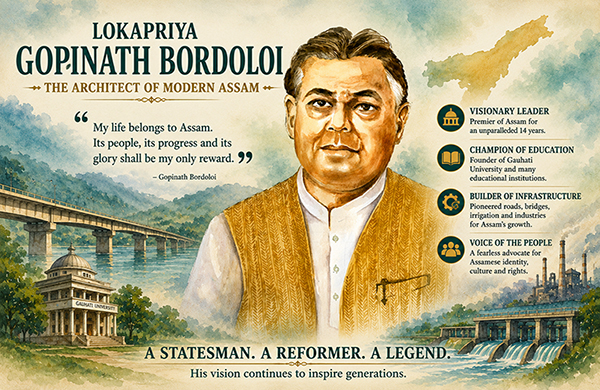
Kamala Miri had leadership qualities in him. He was therefore given the responsibility of Presidentship of Congress Committee of Rongamati Mouza. His responsibility had increased after becoming the president of a mouza. In the last part of the September, 1942, while he was working in the office of congress party, the British police arrested him and his associates. On 8th October, 1942, Kamala Miri and his associates were sentenced to 8 month jail term and sent them to Jorhat Central Jail. In the jail, Kamala Miri met leaders like Gopinath Bordoloi, Fakaruddin Ali Ahmed, Mohammad Taibulla, Amiya Kumar Das, Hem Barua etc. In the jail, Kamala Miri learned how to read Hindi from Gopinath Bordoloi, and make cotton thread in spinning wheel. The health of Kamala Miri deteriorated during his prison term and he was admitted in the Jail hospital. His health condition was not improving rather deteriorating fast. The Jail authorities wanted to get rid of very sick Kamala Miri. The offered Kamala release from hospital provided he promises in writing that he will not he would not join the movement again. To this Kamala replied fearlessly that- ‘I am not in prison for doing anything wrong. I will prefer to die in jail than to give any written promise. If at all I am to promise anything I will give my promise to God only.’ Due to his worsening health condition, the jail authority decided to release Kamala Miri on 23rd April, 1943. To celebrate this good news, Gopinath Bordoloi gifted Kamala a spinning wheel on that day. That spinning wheel is still preserved in a very dilapidated condition at Kamala Miri’s home. Though he was about to be freed from the jail, but this great patriot died as prisoner at 12:30 AM of 22nd April, 1943, just few hours before his scheduled release. If he wished, Kamala Miri, who owned huge property, could live a life of comfort and luxury. But the real patriot that he was, Kamala Miri, loved his country as his own mother and never compromised his patriotism for any material gain. He could understand very well that if he deviates from his path of true patritism, it could destroy his country. India could gain independent only because of the great patriots like Kamala Miri and because of their great sacrifices for the country. Sudhakontho Bhupen Hazarika therefore musically paid his tributes to this hero.
“…. if my weeping mother asks again and again
what you have done for me?
What I will say?
What I will say?”
Bibilography:
1) Kalita, Samin :Swadhinota Songramot Axomor Swahid, Bharati Book Stall, Golaghat, First publish, 2007.
2) Gogoi, Jatindra Kumar: Alok, Bholaguri Kamala Miri Higher Secondary School Golden year Memoir Book, 1997
3) Pathori, Ritupon (edited): Martyr Kamala Miri ‘Memoir Book’ (62nd Birth anniversary), 2005
4) Pujari, Soumitra (edited): Karatirtho: Memoir Book regarding 100th years of Jorhat Central Jail, Deputy Commissioner, Jorhat district, 2013.
5) Borah, Nanda: Swahid Buranjir Duti Pat, Kushal Konwar, Kamala Miri, Saraswati Publication, Golaghat, 2010
6) Bora, Sarat Rana &Gunin Sarma (edited): Disoi-Daria (Memoir Book, 71th Dergaon Session of Assam Sahitya Sabha), February, 2011
7) Laing, Tankeshwar : Mising Jonojibon, Tileshwari Laing, First Publish, March 2006
8) Sarma, Ajit (edited): Ranasinga (Memoir Book of 17th two years session of Assam State Freedom Fighter), Marigaon, Reception Committee, 27th May, 2012.
List of knowledgeable persons consulted:
1) Sri Bagi Laing : Second daughter-in-law of Kamala Miri, assumed age : 80 years
2) Sri Chanmoti Laing : Youngest daughter-in-law of Kamala Miri, assumed age : 70 years
3) Sri Binod Laing : Head Master, Gulung Temera Kamala Miri High Secondary School
4) Sri Arun Pathori : Teacher, Opor Temera Government Lower Elementary School