

By Jatwang Wangsa
Introduction: The North Eastern states of India can be defined as the hub of numerous tribes. In other words it is a mini-India. When we observe their way of livelihood one may find a slight difference among each tribe. However, except attire the overall structure of tribal values, food habits, culture and tradition seems similar. The most common thing one can see among the tribes is that they prefer predominantly simple boiled vegetables and rice for food. They work together, Sing folk songs and dance for no monetary consideration. The sustainable tactics that has been adopted by people of North east India is one of the unique pieces under the sun that needs to be pondered upon. Team work is the basic principle of the tribal communities, just as ants in swarm work hard day and night in collecting their food. Stating an example of inter community relations in doing collaborative efforts for accomplishing any herculean task, there is tribe called “Wancho” on eastern part of Arunachal Pradesh.
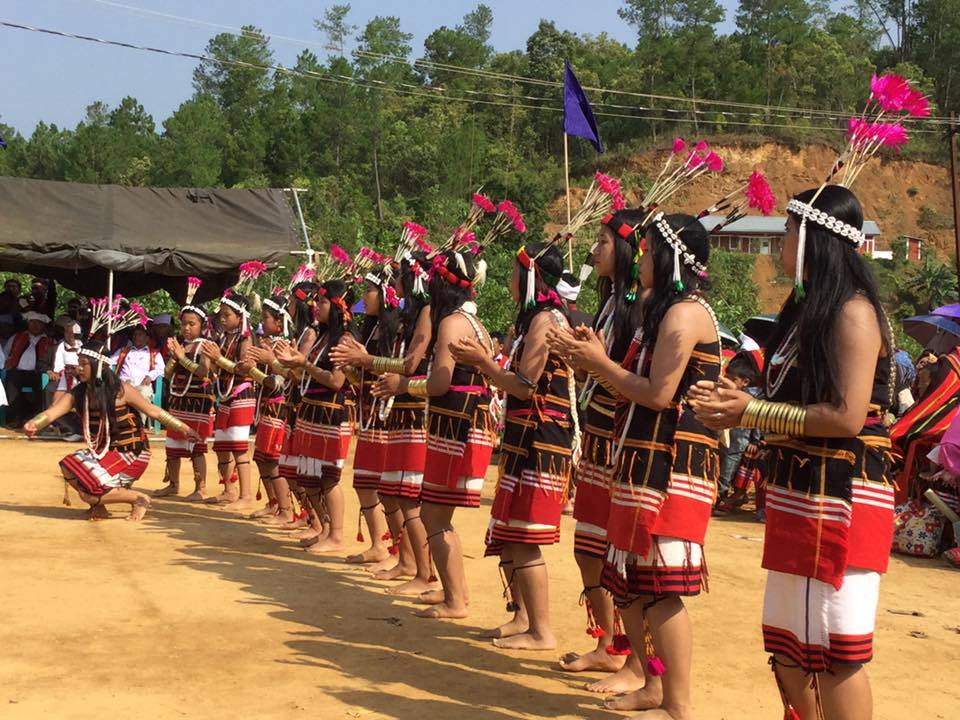
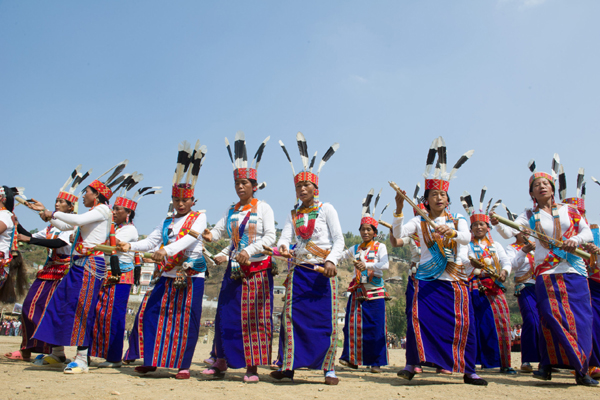
The Wancho, one of the major tribes of Arunachal Pradesh live mostly in eastern side district of Longding. It shares the international border with Myanmar. It has 66 villages in the district. Wancho dialect is their lingua-franca. However, Wancho speaking people also live beyond the border in Myanmar region adjacent to the Indian side. The activities of Wanchos are worth mentioning. They never leave a single man behind to handle it alone in daily walks of life, especially at the time of constructing the dwelling house for an individual. They work jointly enjoying the togetherness, for them any physical energy involving activities isn’t merely a task but a kind of merry making or celebration. In simple way, one can easily understand that it is a classic example of living a wonderful life of ‘intercommunity relation’. Some of the deeds that the Wancho people do collaboratively in team spirit every time are; 1) House Construction, 2) Cleaning weeds in the farm, 3) Paa-Construction, 4) Crop harvest, 5) Log-drum installation, 6) Community fishing, 7) Bridge making, 8) Road cleaning, 9) Community hunting, 10) Death funeral, 11) Festival Celebration.
House Construction: In Wancho community, whenever a new house is to be constructed by an individual or being reconstructed in certain village, it is never a one man task to struggle and accomplish alone. It is always a collective responsibility of the entire village to build the house. The necessary housing materials like bamboo, leaves, woods, ropes etc would be collected by the villagers as helpful response to the intimation by the aspirant house owner. The physical labour support extended to the aspirant house owner by the villagers for house-building work is the rotational custom that can be seen year after year. This is indeed the priceless gift that has been inherited by the younger generations. However, in case the house owner has capacity to feed the fellow helpers after completion of his work done, he can keep a lunch programme but not in a classy way but in a simple manner. On the other hand such feasts would never be expected from the poor person within the village, instead his/her house would be constructed at no charge with voluntary contribution of household materials from each villager. The Chief’s house which is in fact the biggest one in the village is also constructed with the joint effort of all the whole villagers. Therefore, people in the villages of Wancho tribe hardly ever feel lonely. In the eyes of outside observers the life in villages may seem something else but the people there live very peaceful and contended lives in a civilized manner in contrast to the so called developed metropolis living style.
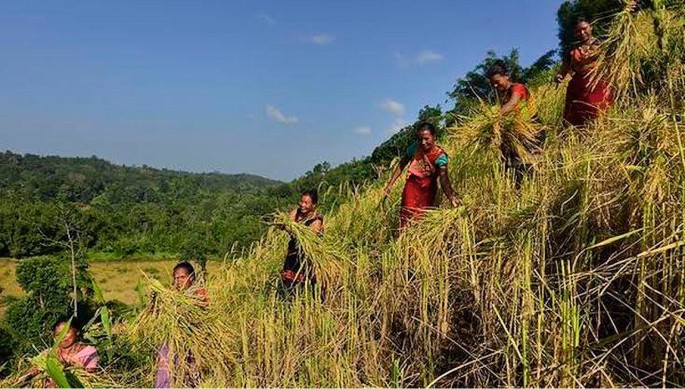
Cleaning weeds in the farm: Generally in developed societies, execution of farming is calculated as per the availability of capital in the hands of an individual farmer. Less money means smaller quantity of work. On contrary to that, the farming activities of villagers of Wancho community are distinctive in its kind. During the work of weeding in the paddy field, all the relatives and friends would come together at one particular farmer’s farm and jointly do weeding-out process. There is no fix number of relatives in joining the work unless the farmer makes certain limitations. There was a time when more than fifty workers would work in the field on the basis of rotation or turn wise. The rotation of clearing the weeds goes on until they get-on to the last one. It involves no money for labour charge; however lunch has to be provided by the concerned land owner where the work has been done, so in that case he/she has to go through minor expenditure for very simple boiled rice and locally procured vegetables to feed his friends and relatives. Such type of sharing physical work reduces stress and work load. It also helps strengthen the bond among their friends, relatives and family members. In so called developed societies, such trends of helping one other in need is rarely seen.
Paa (Male dormitory cum institution) construction: The ‘Paa’ is not only a hall of residence for young boys but it’s indeed an eminent institution for every village of Wancho tribe. It is often termed as “Morong” by some north eastern states of India. The male teenagers learn the disciplined way of life in the Paa. It is the place where stories are told to younger boys by the elders, which has to be passed on from one generation to another. This institution builds up the strong relationships and mutual understanding among the male members of the village. Whenever the New Paa is constructed or re-construction is taken up, then that occasion becomes not merely collective task for villagers but it is considered as one of the grand festival. It is the responsibility of every villager to collect the construction materials and bring it on a single platform. The Paa is still build by echo-friendly materials like Palm leaves (Toko Patta), woods, bamboos etc. The erection of Paa is the outcome of efforts made by every villager especially male members. Grand feast and display of traditional dances and songs would follow up as soon as its construction work is finished.
Log drum: The log drum of Wancho tribe is biggest and heaviest sound instrument in the world. It is installed in “Paa” and the chief’s residence. Boys are authorised to beat the log drum kept in the ‘Paa’, while girls are only permitted to beat which is laid in Chief’s house. The focal point to observe here is, Log drum has got several beating sounds, depending upon the situation. Its beat sounds tell about the different occasion. For instance, during festivals it is played by many people at a time with some kind of rhythmic sound by which it acts as type of musical instrument during festive seasons. It has a beating sound that tells whole villagers when an aged man or brave person from the particular village happens to expire. On the other hand it has also sound that alarms about life threats like fire accident, wild animal attack, worst accident case etc. The typical log drum sounds notify the people regarding of the occurrence of every event. Accordingly villagers come together and rush to the incident spot whatever it has occurred. The log drum of the Wancho is a wonderful instrument to communicate the larger number of people in the village. Thus it is kind of object that serve as inter communication link among villagers especially during happy moments and danger sensing times.
Bridge Construction: Just as invention of wheels in human history led the mankind to travel long distance, likewise bridge making over the forceful rivers by many hill-tribes is a major break-through in their lives. Having knowledge of bridge construction made the one community to intermingle with the other. Bridge making involves heavy collective efforts of people. It is a community engrossing work that had meaningful tale to pass on to future generations. Coming together to accomplish such a risky task made people to have close emotional attachment among them. Nowadays, where metalled roads and bridges have come, the story of hardships faced by people in the past has become merely like fables. However, bridge construction event served as one of the most significant means to develop inter community relationship among different communities.
Community road cleaning: In the present context it is sometime referred as ‘’Social Service” when a certain community come forward and do some socially useful work in a public place. Nevertheless, in the villages of Wancho tribe, community road clearing or cleaning has been in practice since time immemorial. In the villages, road cleaning work is done by entire villagers as a set responsibility of all, because clean and cleared roads to agricultural fields ensured safety and comfort to travel ahead. Every male member is usually made mandatory to stand up for the road cleaning work, failing which some logistic fine is being imposed by the village authorities upon the defaulters. Even today, such trend is still pragmatically prevalent. Thus, every male member doesn’t want themselves to be tagged as dodger and as a result everyone does joint hands to work together, letting themselves knew to the crowds about his presence. It is absolutely a positive and constructive part of Wancho custom, that built inter relationship unwillingly or willingly among the same community.
Conclusion: It is clear indication from the above that sharing of work among the community members is the exclusive key to uphold and inculcate the perception of “Intercommunity relations” to the younger minds. Work is not only worship but it also shows the way in connecting people of distant places far beyond our thoughts. No work means, no more expansion of knowledge and interrelations with rest of the world. Unfortunately it is felt that in these days the work culture seems diminishing day by day with the advent of mix culture engulfing the minority tribes from the majorities. Essentially it is worth mentioning that many tribal cultures have rich acumen of living a disciplined and civilized life which can be taught to the rest of the people in the world. Tribes’ men living behind woods in the midst of echo-friendly world can be underrated. People living in forest and hill tops carry far better moral values than people living in so called civilized cut-throat competitive society.